Yes. Food gives about 20–30% of the water you take in each day. But the amounts health bodies recommend for drinks, and the daily goal in Hydra, already leave food out. So don't subtract food from your goal: drink to the goal, and the water in your meals comes on top.
"Does food count towards my water intake?" is one of the first questions people ask once they start tracking what they drink. It's a good question, and the answer changes how you read any water goal. When I built Hydra, I had to decide what the daily goal should include, and this is the reasoning behind it.
How much of your water comes from food
Your body gets water from two places: what you drink and what you eat. The health bodies that set water recommendations count both, and call the sum total water.
- The European Food Safety Authority (EFSA, 2010) puts total water at 2.0 litres a day for women and 2.5 litres for men. About 70–80% of it comes from drinks and 20–30% from food.
- The US Institute of Medicine (2005) puts total water at 2.7 litres for women and 3.7 litres for men, and says food provides about 20% of it. From drinks, that leaves about 2.2 litres for women and 3.0 litres for men.
Put side by side, the split looks like this:
| Recommendation | Total water | From drinks | From food |
|---|---|---|---|
| EFSA, women | 2.0 l | 1.4–1.6 l | 0.4–0.6 l |
| EFSA, men | 2.5 l | 1.75–2.0 l | 0.5–0.75 l |
| US (IOM), women | 2.7 l | about 2.2 l | about 0.5 l |
| US (IOM), men | 3.7 l | about 3.0 l | about 0.7 l |
So in round numbers, food gives you somewhere around half a litre a day (17 oz), a bit more for men and for people who eat a lot of fresh food. That's real water, and it does count for your body.
Which foods bring the most water
The share from food depends on what you eat. Fruit, vegetables, soups and stews are mostly water. Dry foods like bread, crackers, nuts or crisps bring very little.
That's why the recommendations give a range (20–30%) rather than one number: a day of salads, fruit and soup gives you more water from food than a day of sandwiches and snacks. I won't list water percentages for individual foods here, because the useful point is simpler: watery food helps, dry food doesn't, and neither changes how much you should drink.
Why Hydra's goal is for drinks only
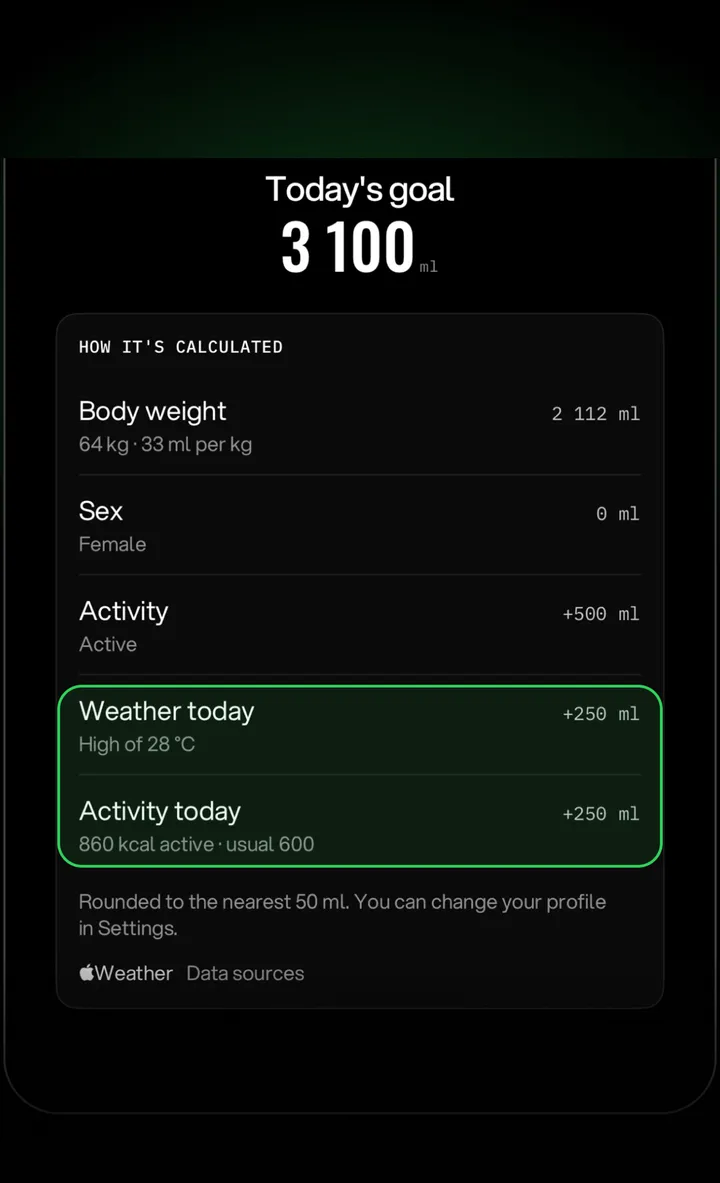
Hydra's daily goal is the water you should get from drinks. It starts at 33 ml per kg of body weight and adjusts for sex, activity and climate; a lightly active 70 kg (154 lb) adult in a temperate climate gets 2 500 ml (about 85 oz). For an average adult, that lands between the European and the US recommendations for drinks, the middle column of the table above, not the total.
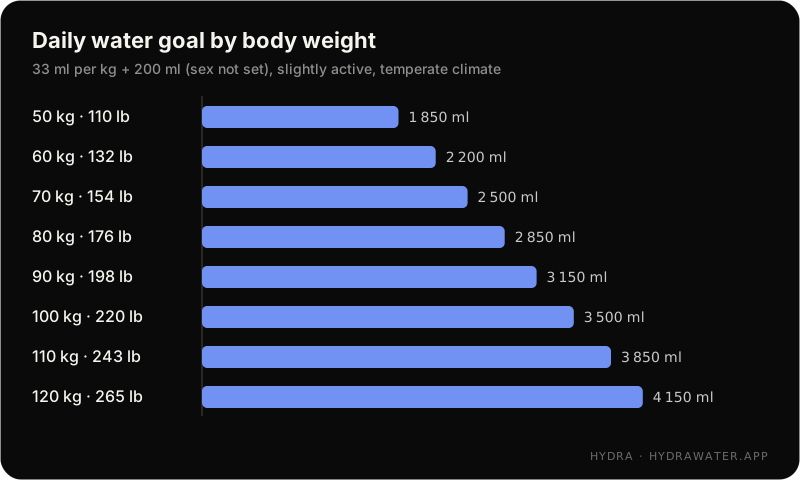
There are two reasons I built it this way. The first is that the drink part is the part you control and can count: a glass is a glass. The water in food would mean weighing what you eat and guessing its water content, and a guess on top of a guess isn't a better number. The second is that the recommendations already did the work: the drink amounts were set with the food part taken out. A drink goal, filled with drinks, matches what they describe.
If you want to see how the goal is built for your body, there's a full guide on how much water to drink for your weight, and the water intake calculator gives you your own number in seconds.
What this means in practice
- Don't subtract food from your goal. The goal already assumes you get some water from food. Taking it off again would count it twice and leave you short.
- Watery food helps, but you don't log it. A bowl of soup or a plate of fruit adds to your total water. In Hydra it stays off the log; think of it as a small buffer on top of your goal.
- Log what you drink, all of it. Juice, milk, coffee and tea are drinks, so they go in. Coffee and tea count like water in normal amounts, which I explain in whether coffee dehydrates you.
- On dry-food days, don't fall short. If you eat little fresh food, your total water is a bit lower than usual, so it's a good day to make sure you reach your drink goal.
- Don't eat to hydrate. Fruit is great, but it isn't a replacement for drinking. Some habits that make drinking easier are in how to drink more water.
Not all drinks count the same
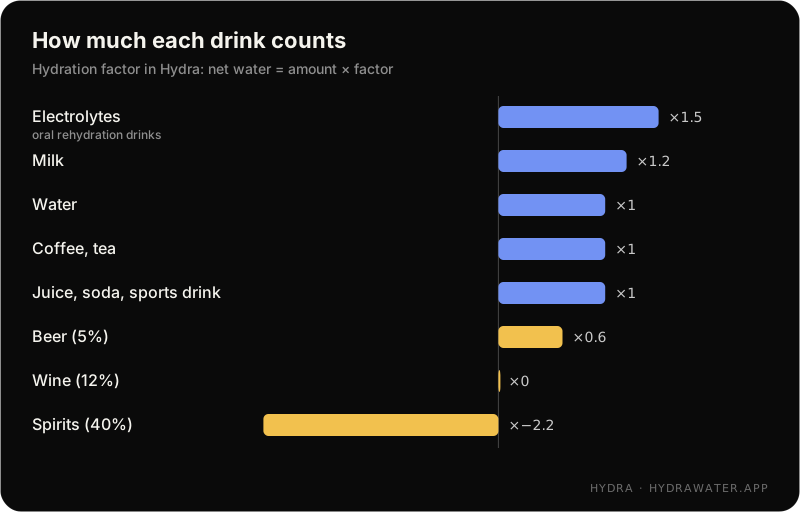
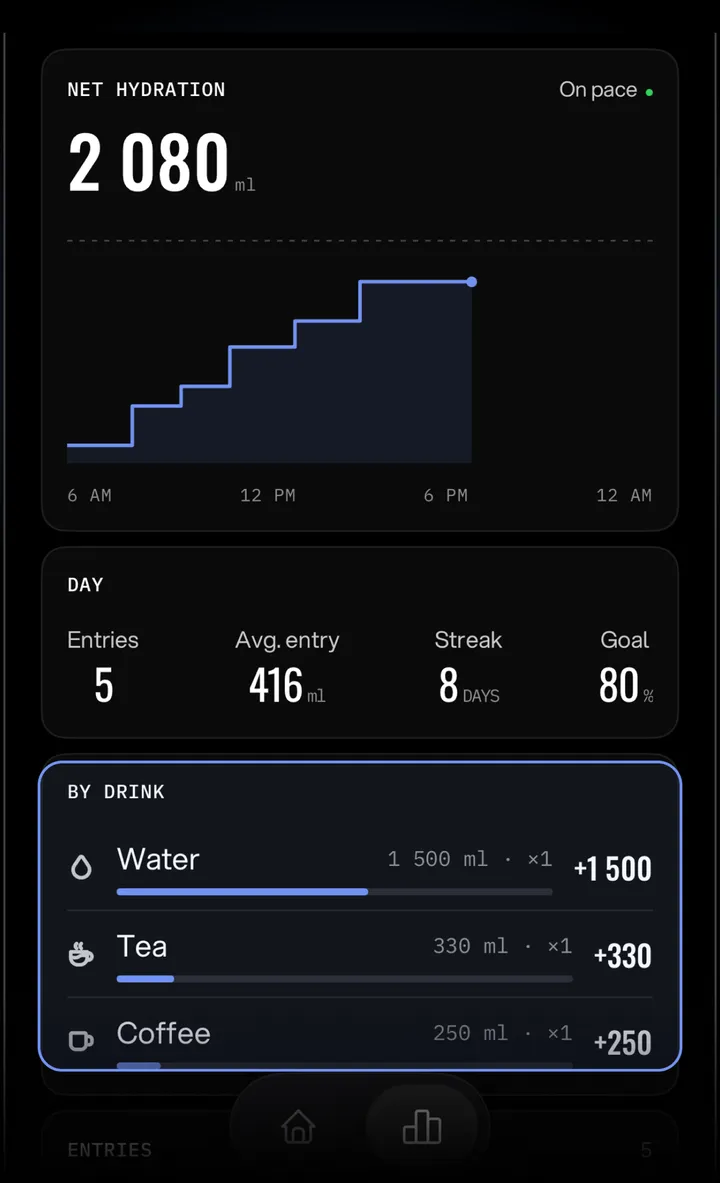
Once you only count drinks, the next question is how much each drink counts. Hydra tracks net hydration: every drink is multiplied by how much of it your body keeps. Water, coffee, tea, juice and soda count as their volume. Milk counts a little more, which you can read about in whether milk hydrates better than water. Alcohol counts less, and strong drinks take water away.
One last note. This is about healthy adults. If you have a heart or kidney condition, or your doctor has told you to limit fluids, follow their advice: it comes before any app or rule.
Track your drinks, let food be the bonus
Hydra sets a daily goal for drinks from your weight, activity and climate, and counts each drink by how much it really hydrates. Free on iPhone and Apple Watch.