A little, yes. In a 2016 study an oral rehydration solution was kept about 1.5 times as well as water over four hours, while a sports drink came out the same as water. For everyday life water is enough; electrolytes earn their place in long, very sweaty workouts and in the heat.
Do electrolytes hydrate better than water? It's a question I had to answer with a number when I built Hydra, because the app counts every drink by how much of it your body keeps. Put the wrong number on a drink and your whole day adds up wrong. So I went looking for measurements, not marketing, and this article is what I found.
What the study measured
The best data comes from a 2016 study that created the beverage hydration index. Volunteers drank about a litre (34 oz) of one of 13 drinks on different days, and the researchers measured how much of it their bodies kept over the next four hours, compared with still water.
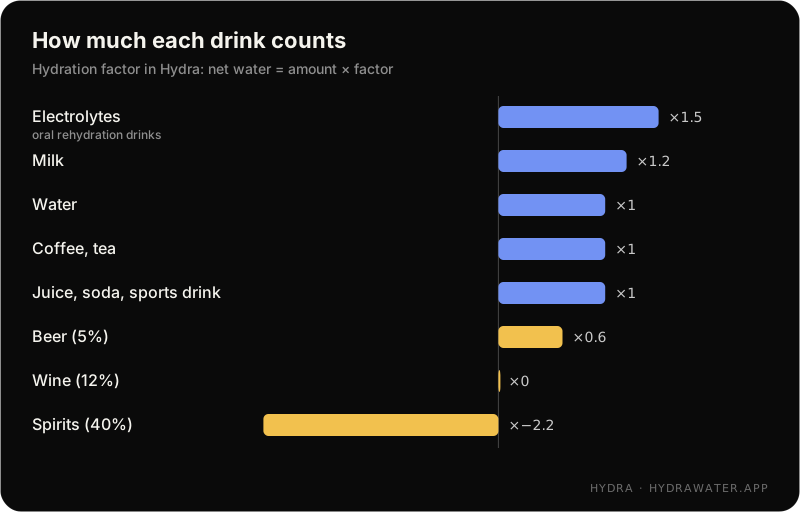
Most drinks landed right on water: sparkling water, cola, diet cola, tea, coffee, lager and a sports drink were not different from still water. Four drinks were kept better: an oral rehydration solution, full-fat milk, skimmed milk and orange juice. The oral rehydration solution came out at about 1.54, so roughly half as much water again stayed in the body.
Two things stand out to me. First, a "hydration" drink made for athletes did no better than tap water. Second, ordinary milk did about as well as the medical-style rehydration drink. I wrote more about that second one in why milk hydrates better than water.
Why salts help water stay
The researchers' explanation is simple. Drinks that carry sodium and potassium, and in some cases sugar and protein, slow down how fast the water leaves your body. With plain water nothing holds it back, so more of it is gone within those four hours. With a rehydration drink, the body holds on to more of it for longer, which is exactly what the hydration index measures.
That's also why a "hydration" claim on a label doesn't guarantee anything. The sports drink in the study was made for exactly this job, and it still came out like water. And for most of us, most of the time, the difference between drinks matters far less than simply drinking enough over the day.
Electrolytes, sports drinks and water compared
Here's how the drinks from the study compare, and what the same 500 ml (about 17 oz) adds to your day in Hydra:
| Drink | In the 2016 study | Hydra factor | 500 ml adds |
|---|---|---|---|
| Still water | The reference | ×1 | 500 ml |
| Sparkling water | Same as water | ×1 | 500 ml |
| Sports drink | Same as water | ×1 | 500 ml |
| Milk | Kept better, about 1.5 | ×1.2 | 600 ml |
| Oral rehydration solution | Kept better, about 1.54 | ×1.5 | 750 ml |
When electrolytes make sense
The American College of Sports Medicine's position stand on exercise and fluids is the guide I lean on here. It says that during exercise people sweat about 0.5 to 2 litres an hour (17 to 68 oz), more in the heat, at higher intensity and in bigger bodies. Sweat carries salt out with the water, and that's where electrolytes come in.
- Long or very sweaty sessions. For long workouts, or ones where you come off soaked, drinks with sodium help you replace what you lost.
- Hot days. Heat pushes sweat rates towards the top of that range, even with moderate effort. More on that in how much water to drink in hot weather.
- After a big loss. Weigh yourself before and after: 1 kg lost is about 1 litre of sweat. The guidance is to drink about 1.5 litres for every kilogram lost (about 23 oz per pound), and a drink that the body keeps better helps that water stay.
The same position stand suggests not losing more than about 2% of your body weight to sweat during exercise. If you want the whole picture of drinking around training, I put it together in how much water to drink when you exercise.
When water is enough
For a normal day, a desk job, a walk, a usual gym session, water is fine. The same position stand says so: for usual workouts, water does the job. You don't need electrolytes to reach your daily goal, and you don't need a sachet in every bottle.
It's also worth saying what electrolytes are not. A higher factor doesn't mean "drink more of it". Drinking far more than you sweat isn't better, and very large amounts of fluid in a short time can dilute the sodium in your blood, which is dangerous. Spread your drinks over the day and let thirst guide you.
And if you're ill, vomiting, or can't keep fluids down, that's not a hydration-app question. See a doctor.
How Hydra counts electrolytes and sports drinks
In Hydra every drink has a factor, and net water is simply the amount times the factor. For electrolytes I kept the measured number: the study found about 1.54, and the app uses ×1.5. A 500 ml rehydration drink adds 750 ml (about 25 oz) to your net hydration.
Milk is the drink where I went lower than the study, to 1.2, so a big latte every morning doesn't quietly inflate the day. Electrolyte drinks are different: you usually reach for them after a hard session or on a hot day, exactly when the extra water staying in the body is the point. So the measured value stays.
Sports drinks count ×1, like water, because that's what the study found. The same goes for sparkling water, which I explain in whether sparkling water hydrates you. If your drink is a proper rehydration solution, log it as Electrolytes; if it's a regular sports drink, log it as Sports drink.
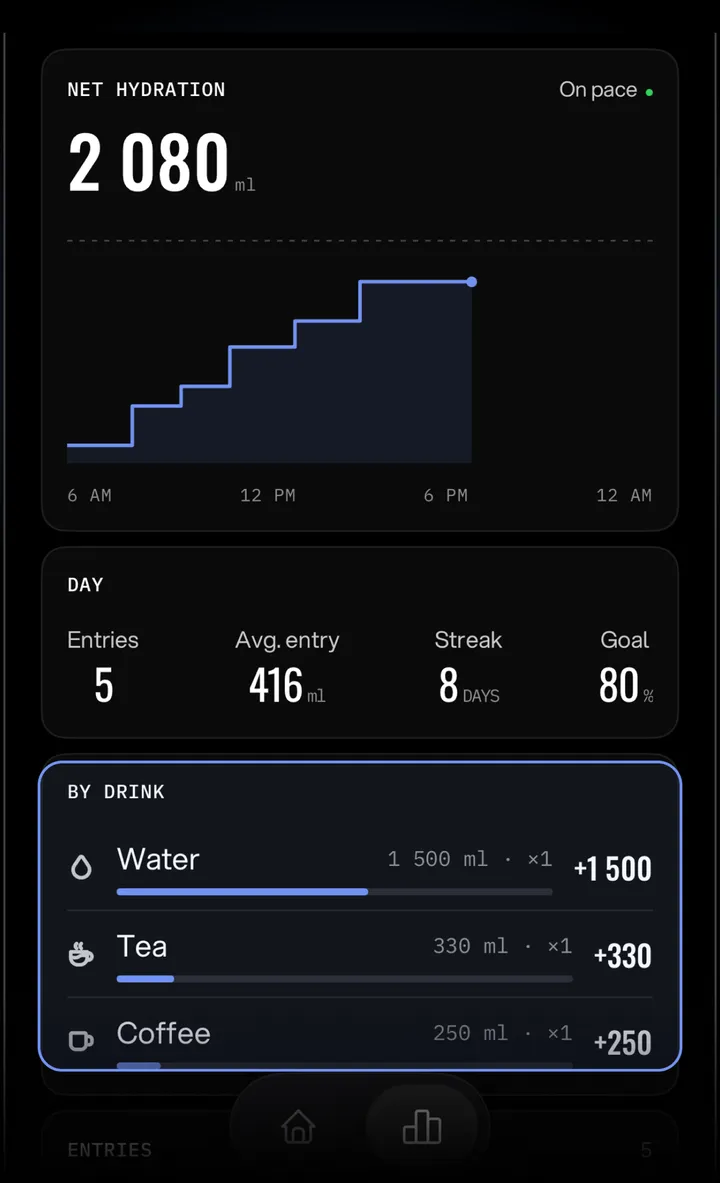
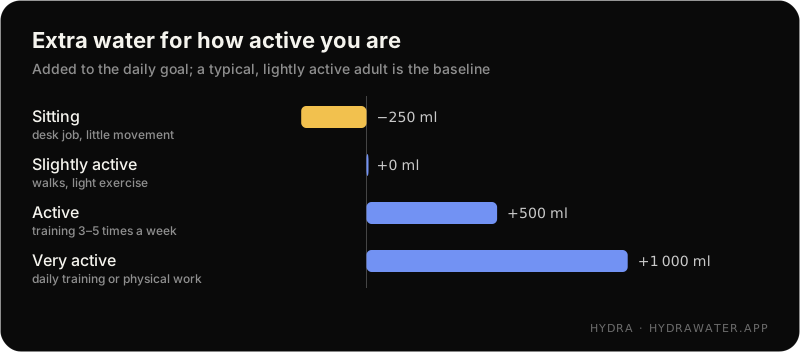
What the factor doesn't change is your goal. That still comes from your weight, sex, activity and climate. If you want to see yours, the daily water calculator uses the same formula as the app.
What to take from it
- Oral rehydration solutions are kept about 1.5 times as well as water. That's real, but modest.
- Sports drinks were no better than water in the study. Hydra counts them ×1.
- Use electrolytes for long or very sweaty sessions and in the heat. For everyday drinking, water is fine.
- More isn't better. Drink to your goal and to thirst, not past it.
- If you're ill or vomiting, talk to a doctor.
Count electrolytes for what they're worth
Hydra counts a rehydration drink at ×1.5 and a sports drink like water, so your net hydration reflects what your body keeps. Free on iPhone and Apple Watch.